

Self Managed Super Fund Property Loan
As an independent, vertically integrated non-bank lender, Mortgage House assesses SMSF scenarios directly, explains LRBA structuring in plain English, and aligns your property choice with policy, valuation and settlement timing. Explore our SMSF hub and speak with a Lending Specialist.

What is an SMSF property loan (LRBA)?
An SMSF loan uses a Limited Recourse Borrowing Arrangement (LRBA) to acquire a single acquirable asset (or a permitted replacement) held in a holding/bare trust until the loan is repaid. The fund has a beneficial interest and the right to take legal title after repayment, and all dealings must meet arm’s-length and sole-purpose requirements.
Important: Under current ATO rules, borrowing to construct or improve an asset is generally not permitted under an LRBA. SMSFs can’t live in or rent residential assets to related parties. Always obtain professional advice.


Future-proof your retirement with a SMSF property loan or a commercial SMSF loan
Want to be more hands on with your super investments?
Are you keen to build your property portfolio long-term?
Ready to proactively prepare for your retirement?
Interested in exploring the benefits of a commercial SMSF to diversify and enhance your investment strategy?
There is a great deal of freedom that comes from planning your financial future. A Self-Managed Super Fund is a worthwhile consideration if you want to map out your retirement funding and control where and how your superannuation is invested.
A SMSF can encourage some exciting investment options, such as investing in property, including commercial real estate. Holding commercial property within your SMSF can provide diversification benefits and potential tax advantages. Our expert SMSF Property Loan Guide has all the information you need to make informed decisions about your SMSF investment goals.
As one of Australia’s accredited SMSF lenders, the Lending Specialists at Mortgage House are experienced and here to help you navigate the government regulations seamlessly. We can easily explain the different borrowing requirements and restrictions for your SMSF property loan to ensure you achieve the best loan possible in line with your specific circumstances.
Once you have set up your SMSF, let us help you discover the thrill of diversifying your investment portfolio with specialised funding for your SMSF property loan.

What you’ll get out of our FREE Guide To SMSF Home Loans

LRBA fundamentals, step by step
How holding/bare trusts work, title flow, recourse limits, and the sequence from contract to settlement.

Permitted vs prohibited actions
Acquire/repair/maintenance versus improvements or construction (not allowed with borrowings).

Structure choices

Investment strategy alignment
Documenting risks, liquidity, insurance and exit planning to meet ATO expectations.

Cash-flow modelling tools
Repayments, buffers and rental yield stress-tests using Mortgage House calculators.

Documentation & timeline checklists
LRBA-enabled trust deed, holding trust deed, minutes, bank account, ESA, registration, audit pathway.
Credit policy insights

Post-settlement operations
Rent flows to the fund, ongoing audit/returns, rate reviews, and when refinancing may be feasible under policy.

What we can help with
- Residential SMSF property (investment only; no related-party use).
- Commercial SMSF property including business real property where arm’s-length terms apply—coordinate with Commercial Finance.
- NDIS/SDA & co-living dwellings considered case-by-case where super law and arm’s-length conditions are met.
- Not available: construction loans inside SMSF borrowing structures. We’ll explain compliant alternatives and sequencing.

Types of SMSF Loans
- Purchase With Existing Balance + LRBA Top-up: Fund contributes deposit/costs; LRBA covers the remainder.
- Business Real Property Acquisition: The fund buys premises and may lease to a related trading entity at market rent (properly documented).
- SDA/NDIS Tenancy Models: Strong due diligence on provider agreements, compliance and vacancy assumptions.
Setting up a new SMSF — work with your trusted accountant
General information only; seek licensed tax, legal and financial advice tailored to your fund.
- Choose trustee structure: individual vs corporate trustee (corporate often preferred for continuity/admin).
- Draft an LRBA-enabled trust deed: deed must permit borrowing and a holding/bare trust.
- Register the SMSF with the ATO within 60 days; obtain ABN/TFN.
- Open the fund bank account and set up ESA for SuperStream rollovers/contributions.
- Create the investment strategy: risk, diversification, liquidity, insurance and exit plan.
- Establish the holding/bare trust before exchange/settlement to avoid title issues.
- Pre-approval: obtain lender pre-assessment before signing; ensure contract/nominee wording matches the LRBA structure.
- Arm’s-length evidence: independent valuation/market rent; document any related-party dealings.
- Appoint an SMSF auditor and maintain records for annual returns from day one.

Ready to move? Speak to a Lending Specialist
Bring your trust deed (draft is fine), accountant’s notes, and target property details. We’ll map a compliant pathway and credit-assess your LRBA options.

SMSF pricing reflects LRBA complexity and risk; fees plus legal/valuation costs apply and are disclosed up front.

We model borrowing capacity and buffers using rental and contribution assumptions; validate with our calculators.
Apply Online Anywhere, Anytime.
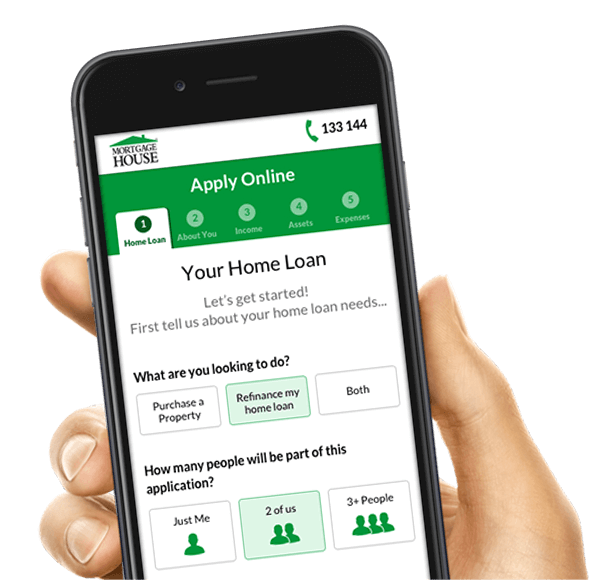
Get Started Now
Navigate the rules of SMSF’s with expert help
If you are considering future wealth creation using a self-managed super fund (SMSF), the best place to start is with professional financial advice. Whether you have already set up your SMSF or are considering it, speak to a qualified financial advisor or your SMSF experienced accountant to make sure everything is in order before committing to an SMSF loan or purchasing property assets.
Define your SMSF strategy
You will feel in control and encouraged to grow your SMSF portfolio if you have defined a clear strategy. Outline your savings goals and how you plan to achieve them. If you are considering purchasing property using your SMSF, define your budget, the type of property you want to buy and how you plan to finance the loan. Having a plan in place can help you make informed decisions and ensure that your investment is aligned with your long-term financial goals.
Secure the right SMSF property loan
Once you have decided to diversify your SMSF by purchasing an investment property, you should research and find 5-star SMSF Lending Specialists and loan products. Funding your property purchase using your SMSF requires correct advice and competitive loan products that aligns with the strict superannuation government regulations. Choosing Mortgage House to advise and assist with the process will give you the clarity you need to maximise your superannuation potential for retirement.
What customers say
Before using Mortgage House, we tried another broker who made us feel like we weren't important enough for him to bother dealing with properly, and we always felt like we weren't getting the whole story. Jenny from Mortgage House was completely different. From the very beginning she kept us in the loop of everything that was happening, and always made sure she got back to us in a timely manner. Being completely new to this whole process she answered all questions we had and never made us feel like we were asking a dumb question. I don't think we would have been able to buy our first property without Jenny or Mortgage House. Thanks for everything!
Cannot recommend Michael Richardson from the Sutherland branch enough - he assisted us through the transition of refinancing a mortgage every step of the way. He was always available to talk through the options & guided us wherever he could with the documentation requirements. He visited our house after hours to accommodate us getting through what would normally have been an onerous task for 2 busy working parents trying to save some money on their home loan.
I refinanced and the process couldn't have gone more smoothly, great communication throughout the process made it stress free. All staff very professional and made jargon easy to understand. Not to mention a great highly competitive variable rate that the other lenders couldn't match. Have already highly recommended to friends.
Mortgage House were very helpful. I was extremely nervous about the process of refinancing however, Brij, my consultant made everything easy for me and was really supportive throughout the whole process. The process was also very quick. I would highly recommend Mortgage House.



All you need to know

What is a SMSF?
A SMSF, or Self-Managed Super Fund, is a retirement savings vehicle that gives you complete control over your superannuation investment decisions. With a SMSF, you have the power to choose exactly where your retirement savings are invested and can tailor your portfolio to your individual needs and goals. Not only does this give you more control over your financial future, but it can also provide a greater level of flexibility and potentially better returns compared to a traditional, externally managed super funds. So if you’re looking to take a more hands-on approach to your retirement planning and have the knowledge and experience to make informed investment decisions, a SMSF could be a great option for you. There are strict government regulations to using a SMSF, so please read our guide or talk to a Mortgage House lending specialist.
What are the benefits of using a SMSF to buy property?
The benefits of using a SMSF to buy property are numerous and can provide a significant boost to your retirement savings. Here are just a few of the key advantages:
- Control: With a SMSF, you have complete control over your investment decisions, allowing you to choose the properties you want to invest in and create a portfolio that aligns with your goals and risk tolerance.
- Potential tax benefits: A SMSF can offer tax benefits, including lower capital gains tax and reduced income tax on rental income.
- Diversification: By using your SMSF to invest in property, you can diversify your investment portfolio and potentially reduce your overall risk.
- Borrowing power: A SMSF may be able to borrow money to purchase property, giving you greater buying power and potentially increasing your investment returns.
- Long-term savings: By investing in property through your SMSF, you can potentially increase the value of your retirement savings and enjoy a comfortable retirement.
With all these benefits, it’s clear that a SMSF can be a valuable tool for anyone looking to invest in property and secure their financial future. Mortgage House recommends seeking professional advice to decide whether an SMSF is your best decision.
What are the restrictions for using SMSF to purchase property?
While there are many benefits to using a SMSF to purchase property, it’s important to be aware of the restrictions that come with this investment strategy. Here are a few key considerations:
- Compliance requirements: SMSFs must comply with strict government regulations and investment rules, so it’s important to have a solid understanding of the regulations and ensure that you are meeting all requirements.
- Borrowing restrictions: There are restrictions on the amount that a SMSF can borrow and the types of properties it can purchase, so it’s important to be aware of these restrictions before making any investment decisions.
- Complexity: Managing a SMSF can be complex, and it’s important to have a good understanding of the financial markets, investment strategies, and tax laws in order to make informed decisions.
- Responsibility: As a trustee of a SMSF, you have a legal responsibility to act in the best interests of your members, so it’s important to be aware of your obligations and responsibilities before entering into any investment decisions.
Despite these restrictions, using a SMSF to purchase property can still be a valuable investment strategy for many people. By understanding the restrictions and being aware of your obligations and responsibilities, you can make informed investment decisions that align with your goals and help you secure your financial future. If you wish to move forward and purchase a property using your SMSF, get in touch with our Lending Specialists on 133 144 or read more about SMSF borrowing here.
How does the SMSF purchase process work?
Purchasing a property through a SMSF can seem complex, but the process is actually quite straightforward once you understand the steps involved. Here’s a quick overview of how the process works:
Step 1: Establish a SMSF: The first step is to set up a self-managed super fund and become the trustee of the fund.
Step 2: Determine your investment strategy: Next, you’ll need to determine your investment strategy, including the types of properties you want to invest in and your overall risk tolerance.
Step 3: Research and identify potential properties: Once you have a clear investment strategy in place, you can start researching and identifying potential properties to purchase.
Step 4: Arrange to finance: If you plan to borrow money to purchase the property, you’ll need to arrange to finance and ensure that you meet all lending requirements.
Step 5: Make the purchase: Once you have secured financing and found the right property, you can make the purchase through your SMSF.
Step 6: Manage the property: Finally, you’ll need to manage the property, including collecting rent and maintaining the property, to ensure that it provides the best return on your investment.
By following these steps, you can smoothly navigate the SMSF property purchase process and invest in a property that meets your individual needs and goals. At Mortgage House, we can help with steps 4 & 5. Feel free to contact us for more information about how we support the purchase of your SMSF home loan and read here for more information about the documents required for an SMSF Loan.
Can a SMSF borrow money to buy property?
Yes, a SMSF can borrow money to buy property, and this can be a great way to increase your buying power and potentially improve your investment returns. This is known as “limited recourse borrowing” and it involves the SMSF borrowing money to purchase a single acquirable asset, such as a property. The borrowing is secured against the asset, not the SMSF’s other assets, so the lender’s recourse is limited in the event of default. With limited recourse borrowing, you can potentially increase the value of your retirement savings by investing in property without using all of your available cash. However, it’s important to be aware of the rules and regulations surrounding SMSF borrowing, including the restrictions on the amount you can borrow and the types of properties you can purchase.
Mortgage House offers a number of SMSF Home Loans, one of which may suit your borrowing needs.
What are the eligibility requirements for a SMSF home loan?
In order to be eligible for a SMSF home loan, there are several requirements that must be met, including:
- SMSF structure: You must have a valid and compliant self-managed super fund (SMSF) structure in place.
- Trust deed: Your SMSF must have a trust deed that outlines the rules and obligations of the fund and its members.
- Investment strategy: Your SMSF must have an investment strategy in place that includes the purchase of property as part of the investment portfolio.
- Borrowing power: Your SMSF must have sufficient borrowing power to meet the loan repayments and any related costs associated with purchasing the property.
- Property type: The property you wish to purchase must be suitable for investment purposes and must meet the requirements set out by the lender.
By meeting these eligibility requirements and working with a financial advisor, you can determine if a SMSF home loan is right for you and your investment goals. Keep in mind that each lender has their own specific eligibility requirements, so it’s important to thoroughly research your options before making a decision. For details about the SMSF Home Loans available at Mortgage House, get in touch today on 133 144.
What is the interest rate for a SMSF home loan?
The interest rate for a SMSF home loan can vary depending on several factors, including the lender, the size of the loan, the type of property being purchased, and the borrower’s credit history and financial standing. Some lenders may offer fixed interest rates, while others may offer variable interest rates that can change over time based on market conditions.
When comparing SMSF home loans, it’s important to consider not just the interest rate, but also the loan terms, fees, features, and any other associated costs. You should also consider the lender’s reputation and track record, as well as their customer service and support. By thoroughly researching your options and working with a financial advisor, you can find the SMSF home loan that best meets your needs and investment goals. Mortgage House is experienced in helping SMSF borrowers achieve their property goals. Feel free to get in touch for more information about interest rates for SMSF home loans. You may also wish to read about interest only SMSF home loans.
What are the borrowing limits for a SMSF home loan?
The borrowing limits for a SMSF home loan can vary depending on the lender, the size of the loan, and the type of property being purchased. However, there are several key factors that can impact the borrowing limits for a SMSF home loan, including the SMSF’s overall financial standing, the number of assets held within the fund, and the SMSF’s ability to generate income from its investments.
In general, it’s important to work with a lender that is experienced in providing SMSF home loans, as they will be able to provide you with the most up-to-date information on borrowing limits and help you understand the requirements and restrictions for obtaining an SMSF home loan. By thoroughly researching your options and working with a financial advisor, you can find the SMSF home loan that best meets your needs and investment goals, and you can be confident that you are making an informed decision that is in line with your financial goals and objectives.
The Lending Specialists at Mortgage House will be able to help you with SMSF home loan borrowing limit calculations based on some preliminary questions.
Can I make additional repayments on my SMSF home loan?
Yes, you can make additional repayments on your SMSF home loan! This is actually a great way to reduce the amount of interest you pay over the life of your loan and pay off your mortgage sooner. By making extra payments on your SMSF home loan, you can also reduce the total amount of interest charged on your loan, which is especially beneficial for those who want to build wealth for their retirement through their SMSF. So, don’t be afraid to pay a little extra on your loan from time to time – it can make a big difference in the long run. For more information about SMSF home loan repayments, feel free to contact the Lending Specialists at Mortgage House on 133 144.
How do I apply for a SMSF home loan?
Applying for a SMSF home loan can seem like a big task, but it doesn’t have to be! The first step is to do your research and find a lender that offers SMSF loans and meets your needs. From there, you’ll typically need to provide some information about your SMSF, including its financials and investment strategy. You’ll also need to provide some personal information, such as your income, expenses, and assets. Once you have all the necessary information, you can submit your application to the lender and wait for their decision. And remember, you don’t have to go through the process alone – many lenders offer support and guidance throughout the application process to make it as smooth and stress-free as possible. So, take a deep breath and get ready to take the next step towards securing your dream property through your SMSF! Talk to the SMSF home loan Lending Specialists at Mortgage House today. Call 133 144.
Can my SMSF borrow to build a new dwelling?
No. Construction / improvements with borrowed money are generally not allowed under LRBA rules. Consider acquire-and-repair within guidance, and seek licensed advice.
Can my business lease a commercial property from my SMSF?
Yes, if it’s business real property on arm’s-length terms and properly documented.
Can a SMSF purchase a property from a related party?
Yes, a SMSF can purchase a property from a related party, such as a family member or a business associate, but there are strict rules and regulations that must be followed to ensure compliance. When purchasing a property from a related party, it’s important to ensure that the transaction is at arm’s length and that the purchase price is equal to the market value of the property. This helps to prevent any potential conflicts of interest and ensures that the SMSF is acting in the best interests of its members. Additionally, all transactions between a SMSF and a related party must be documented and reported to the relevant authorities. By following these rules and regulations, you can ensure that your SMSF is in compliance and that your property purchase is in line with your investment goals. However, it’s important to seek professional advice to ensure that you understand all the requirements and to make informed investment decisions.
How do I value the property for SMSF purposes?
Determining the value of a property for SMSF purposes is an important step in the investment process. Here’s a quick overview of how you can value property for your SMSF:
- Market research: Research the current real estate market in the area where the property is located and compare the property to similar properties that have recently sold.
- Appraisal: Hire a licensed property appraiser to provide an independent assessment of the property’s value.
- Cost approach: Consider the cost of constructing a similar property and subtract any depreciation to determine the property’s estimated value.
- Income approach: Consider the property’s potential rental income and capitalization rate to determine its estimated value.
By using a combination of these methods, you can get a more comprehensive understanding of the property’s value and ensure that you are paying a fair price for your investment. However, it’s important to keep in mind that the value of the property can change over time and that you’ll need to regularly re-evaluate the property to ensure that it continues to meet your investment goals.
What are the tax implications of buying a property through a SMSF?
Buying a property through a SMSF can have significant tax implications, both for the SMSF and for the individual members. Here are some of the key tax considerations to keep in mind:
- Contributions: Contributions to a SMSF are taxed at a lower rate than personal contributions, making it an attractive option for many investors.
- Rental income: Rental income received by a SMSF is taxed at 15%, which is lower than the personal tax rate for many individuals.
- Capital gains: If the property is sold for a profit, the capital gain may be taxed at a lower rate than if the property was held personally.
- Distributions: Distributions from a SMSF are taxed as income in the hands of the individual members.
It’s important to understand these tax implications and to work with a financial advisor to determine the best investment strategy for your individual circumstances. By considering the tax implications of a SMSF property investment, you can maximize your returns and make informed decisions about your financial future. If you are thinking of borrowing for a SMSF Home Loan, get in touch with the Lending Specialists at Mortgage House for advice, products and excellent service.
How do I manage and maintain the property within the SMSF?
Managing and maintaining a property within a SMSF can be a complex process, but it’s an important aspect of maximising your investment returns. Here are some tips for effectively managing your SMSF property:
- Hire a property manager: Consider hiring a professional property manager to handle the day-to-day tasks of managing the property, such as collecting rent, maintaining the property, and finding tenants.
- Conduct regular property inspections: Regularly inspect the property to ensure that it is in good condition and that any necessary repairs are made promptly.
- Keep accurate financial records: Keep accurate records of all expenses related to the property, including repairs, maintenance, and rent collected.
- Consider insurance: Consider purchasing insurance to protect your SMSF and its assets in the event of a loss.
By following these tips and working with a financial advisor, you can effectively manage and maintain your SMSF property and ensure that your investment is on track to meet your financial goals.
What are the SMSF reporting and compliance requirements?
Meeting the reporting and compliance requirements is an essential part of running a successful SMSF. Here are some of the key reporting and compliance requirements that you need to be aware of:
- Annual tax return: A SMSF must file an annual tax return and pay any taxes owed on its income and capital gains.
- Trustee declaration: The SMSF’s trustee must sign a declaration each financial year confirming that the SMSF has complied with all superannuation laws.
- Investment strategy: The SMSF must have an investment strategy in place that is designed to achieve its investment objectives and that is reviewed regularly.
- Trust deed: The SMSF must have a trust deed that outlines the rules and obligations of the fund and its members.
- Audits: A SMSF must be audited annually by a qualified auditor to ensure that it is compliant with all superannuation laws and regulations.
By understanding these reporting and compliance requirements and working with a financial advisor, you can ensure that your SMSF is operating within the law and that your investment is protected. When it comes time to arrange a SMSF Home Loan, Mortgage House will provide all relevant borrowing documentation and ongoing statements for your reporting and compliance purposes.
What is a SMSF home loan?
A SMSF home loan is a mortgage that is specifically designed for self-managed super funds (SMSFs) that are looking to purchase an investment property. This type of loan offers several benefits for borrowers, including:
- Tailored terms: SMSF home loans are tailored to the unique needs of SMSFs and can offer flexible repayment terms, lower interest rates, and more favourable loan-to-value ratios than traditional mortgages.
- Tax benefits: By using a SMSF to purchase property, investors can take advantage of the lower tax rate on rental income and any capital gains made on the sale of the property.
- Control: SMSFs have more control over their investment decisions and can choose the property that they want to purchase, rather than relying on a managed fund to make those decisions for them.
- Long-term wealth creation: By using a SMSF home loan to purchase property, investors can build long-term wealth for their retirement.
If you’re looking to purchase property as part of your superannuation strategy, a SMSF home loan may be a great option for you. By working with a financial advisor, you can determine if this type of loan is right for your individual circumstances and investment goals. Mortgage House offers a number of SMSF Home Loans for your to consider.
What types of properties can be purchased with a SMSF home loan?
When using a SMSF home loan to purchase property, there are several property types that are eligible, including:
- Residential properties: This includes single-family homes, apartments, townhouses, and other types of residential properties that are used for rental purposes.
- Commercial properties: This includes office buildings, retail spaces, industrial properties, and other types of commercial real estate that are used for business purposes.
- Mixed-use properties: These include properties that are used for both residential and commercial purposes, such as a building with residential units on the top floors and commercial spaces on the bottom floors.
When choosing a property to purchase with a SMSF home loan, it’s important to consider your investment goals and thoroughly research your options. By working with a financial advisor, you can determine if a particular property is suitable for your SMSF and if it meets your investment criteria.
Can I use a SMSF home loan to buy a property for personal use?
No, a SMSF home loan cannot be used to purchase a property for personal use. The property must be purchased for investment purposes only, and it must be held within the SMSF for the sole benefit of its members. This means that the property cannot be used as a primary residence or for any other personal use, as this would be considered a breach of the SMSF’s trust deed and could result in severe penalties and fines.
It’s important to thoroughly research and understand the rules and regulations surrounding SMSF home loans before making a decision, as some strict rules and restrictions must be followed to remain compliant with the law. By working with a financial advisor and a tax professional, you can ensure that you are making informed decisions and that you are fully aware of your obligations as a SMSF trustee.
What happens if I can't make repayments on my SMSF home loan?
If you find yourself unable to make repayments on your SMSF home loan, it’s important to act quickly to address the situation. While it may seem daunting, there are several options available to help get you back on track. You may be able to temporarily reduce your repayments or pause them all together, refinance your loan, or even sell the property if necessary. The most important thing is to reach out to your lender as soon as possible to discuss your options and work together to find a solution that works for you. Remember, the earlier you address the issue, the more options you will have available to you. Don’t let the stress of missed payments weigh you down – reach out for help and take the first step towards resolving the situation.
Who holds title during the loan?
A holding/bare trust holds legal title until the LRBA is repaid; the SMSF holds the beneficial interest and can take title after repayment.
What documents will you ask for?
Trust deed (LRBA-enabled), holding trust deed, trustee/company docs, investment strategy, bank statements, proposed lease (if commercial), valuation, and standard credit documents.
Compliance Note: All lending is subject to responsible lending obligations, full assessment and verification. SMSF transactions must comply with superannuation law (sole purpose, arm’s-length, contribution caps, in-house asset limits). Nothing here is financial, tax or legal advice—obtain advice from licensed professionals and your SMSF auditor.