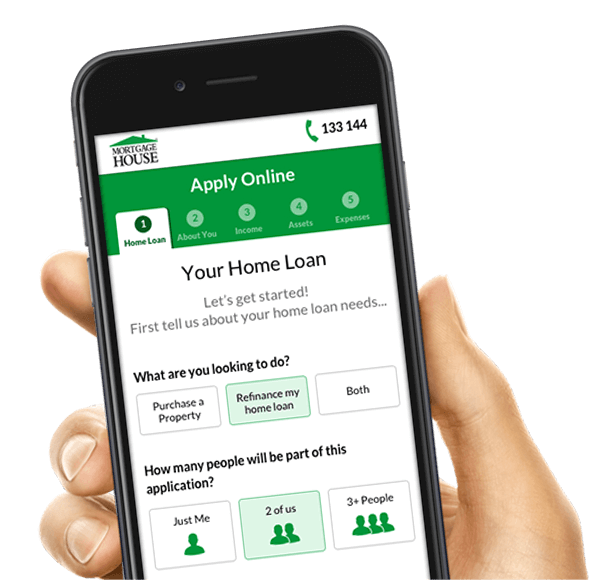

Fast Track Your Home Loan

When looking for a home mortgage in NSW, or a national mortgage anywhere in Australia, there are two different kinds. They are the same in all Australian states and territories, and they all attract certain conveyancing transactions and associated fees. The two home loans are:


Once you have worked out which kind of mortgage in NSW you are looking to apply for, the next step can be finding out how much you might be able to borrow. Whatever kind of property you are looking to buy, whether it’s a part of a strata scheme, a regular apartment, an existing house or a house and land package, you can discover your borrowing power before applying.
By using a Borrowing Calculator, such as the one below, you can get an idea of what a bank or lender may lend you, which can expand or help reduce your property search. All you need to do is provide the information below as accurately as possible, and you could be well on your way to successfully applying for a NSW mortgage. What is important to remember is a Borrowing Calculator is not pre-approval or conditional approval, but simply acts as a guide to help you in your property search.
A Borrowing Calculator can help you be more realistic about your property goals, and it’s also important to take into account any fees and charges that may come with buying a home. It is important to think about costs such as stamp duty when you are looking to buy a home, as well as how much your weekly, fortnightly or monthly repayments will be. A Borrowing Calculator can help you keep within your budget, as borrowing more than you may be comfortable with can be a poor home ownership strategy in the long term. A Borrowing Calculator is a good way to see whether you may need to start smaller and work your way up, especially if the day-to-day sacrifices of a large mortgage are not ones you are willing to make. At the end of the day, our Borrowing Calculator can help you find the information you’re looking for.
Important Disclaimer: This is intended as a guide only. Details of terms and conditions, interest rates, fees and charges are available upon application. Mortgage House’s prevailing credit criteria apply. Please note that your actual fortnightly repayment would be equal to the monthly repayment amount divided by two. Weekly repayments would equal the monthly repayment amount divided by four. If you choose to pay fortnightly or weekly, your actual repayments will be higher than repayments shown on this page. You can reduce the term of your loan if you choose to make repayments fortnightly or weekly. We recommend you seek independent legal and financial advice before proceeding with any loan.
To transfer part of or all of a mortgage in NSW, and therefore the property, to someone else, requires a number of steps, and the first one is contacting your bank or lender. They will need to talk you through the process and let you know what requirements will need to be satisfied before approval. If you are selling your property, then speak to your solicitor or conveyancer about what needs to be done.
The process of transferring a NSW mortgage and property, wither its full or part of the land and building, is done through the NSW Land and Registry Service (LRS). To add your partner’s name to a property title, it can be worthwhile speaking directly to the NSW LRS and letting them guide you. This is because there may be a raft of individual variables involved, and it is important the NSW LRS has as much information about your exact circumstances and needs as possible.
To transfer a share or interest in a property in NSW you will need two mortgage forms:
You can get the transfer mortgage form from:
The Notice of Sale mortgage form can be found:
To register the transfer, the following steps need to be undertaken and the following forms must be lodged with NSW LRS:
One of the fees and charges that may be paid when transferring is stamp duty. Stamp duty is payable on most transfers, whether it was a financial transaction or not, but there may be some exceptions. Contact the NSW LRS for details around these.
When you take out a mortgage in NSW, or transfer it or discharge a mortgage, the land title is transferred from the seller to the buyer, from one person to another. The transfer of ownership to the registered proprietor is recorded by New South Wales Land and Registry Services (LRS). As it is recorded by the NSW LRS, the title is guaranteed by the NSW government, which means the registered proprietor is recorded as the true owners of the land.
There are a number of parties that are involved when you’re buying or selling property in NSW, or any other of the states and territories. They include:
According to the NSW LRS, the time and date of the registration of mortgages in NSW determines their priority. When the preparation of the mortgage in NSW begins, or when the mortgage is executed is not taken into consideration when it comes to timing priorities. However, a registered mortgage will have priority over an unregistered mortgage.
Once you have been approved for a mortgage in NSW, the paperwork doesn’t immediately finish. Conveyancing transactions still have to be done, stamp duty has to be organised and the legal work around changing the title and ownership needs to be arranged. That is why it is good to choose a solicitor or conveyancer when you decide to apply for a home loan. They will ensure all the documents are ready for you to sign, and let you know what steps need to be taken. One of these steps is finding witnesses who will sign the relevant documents. These witnesses can include the conveyancer or lawyer themselves, or another kind of lawyer. A witness can also be a Justice of the Peace, a notary public or someone who has been given witnessing rights in law.
Mortgage House’s Lending Specialists can answer any of your mortgage offset account questions and help you save on interest and pay off your home loan sooner. Our Lending Specialists can also be a great place to start if you are looking for a loan to suit you and your family, including home loans that include the offset account feature. We have put together a list of the top 10 questions to ask a Lending Specialist to help guide you towards a suitable mortgage.
You want to feel that your Lending Specialist has asked you several questions and is genuinely trying to assess your individual needs before providing an answer to this question.
Our Lending Specialists will have a plain English checklist of the items you need to gather when applying for a loan.
While you want to hear a low interest rate, we will take the time to explain what the Comparison Rate is, which provides a more accurate platform to measure more than one loan product. Sometimes the lowest interest rate can end up costing you more in the long run.
It is important to have a full list of fees explained to you thoroughly and in an easy-to-understand way.
The answer to this is yes. This means that the lender will lock in your interest rate for a period of up to 2 months from the date your home loan is approved. This means that even if mortgage interest rates go up before your loan has settled, your rate won’t change.
Ideally, you would like to be able to make additional repayments on your home loan to be able to pay it off sooner and save on interest, without a financial penalty.
This is important, as there can be 3 levels of approvals to understand – Pre Approval, Conditional Approval and Full Approval.
The average time for a refinanced loan to settle is approximately 4 weeks from when full approval is given. For property purchases, the average settlement time is approximately 6 weeks from when contracts are exchanged or the 10% deposit has been paid.